It has been a long five years since my last film review and truthfully, I never felt like I got into the swing of it. So to kick off my 2025 and get back into my fanaticism of film, I have planned two weekly film reviews and hopefully I will stick to it:
- Look Back Monday – I will be looking to films made in 2024 and back. If a film was made as part of a franchise, I shall watch the preceding films first.
- New Release Wednesday – With all the new releases in 2025 and an Odeon Limitless membership, it makes sense to get my fill of the latest releases.
There is the high chance that the reviews for these films are published on Tuesdays and Thursdays, but my viewing of them will be done on Monday and Wednesday.
So with that said, let me begin my 2025 with the first Look Back Monday review of Gladiator (2000).
Gladiatior (2000)
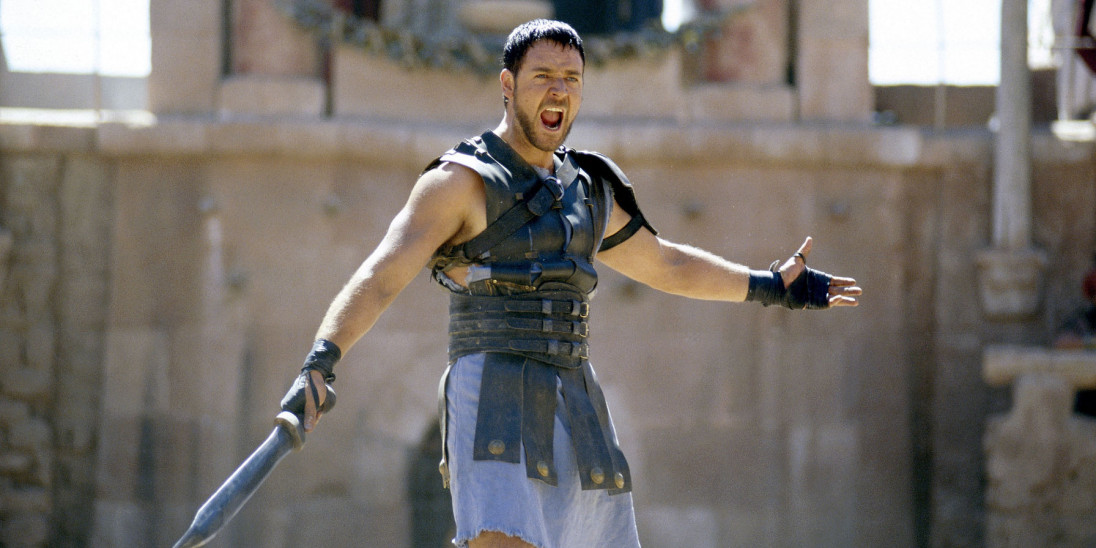
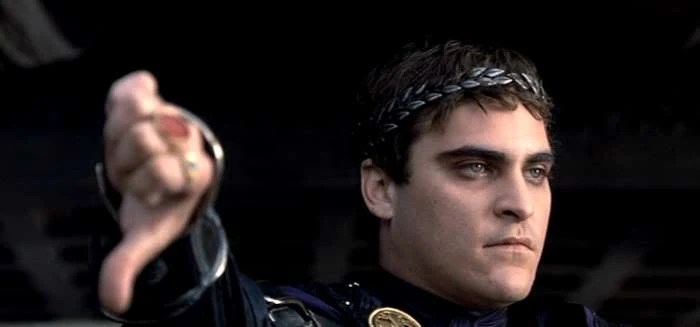
The classic Ridley Scott film stars Russell Crowe, Joaquin Phoenix, Connie Nielsen and Derek Jacobi, among others, in a historical action revenge story of a man, Maximus (Crowe), who seeks vengeance for the murder of his wife and child. Before he can exact his revenge, he is sold into slavery as a gladiator in the arena, where he publically announces his plan to murder the now sitting Emperor of Rome, Commodus (Phoenix).
Thoughts on the Story
The concept of a revenge quest is a fairly standard one in modern storytelling. Some that come to mind personally are Rip Hunter in DC’s Legends of Tomorrow, Patrick Jane in The Mentalist, and Baron Zemo in Captain America: Civil War. The thing that all of these examples have in common is that a characters wife and child died from the actions of another. The difference is how each story handles the outcome. All of them succeed, but Zemo is branded the villain; Jane is considered to lose the moral high ground; Hunter was only allowed to go through with it if he did it with accomplices. But with Maximus, there is no question of morality, just pure righteous victory. When it all came down to his triumph, there wasn’t a grand chorus of cheers or boos. It wasn’t a question but a statement that he was right to do as he did. His moment of victory also becomes one of his final moments in life, and he feels at peace to finally let himself die.
Although the concept of a revenge story has been repeated in these and many other films and TV shows, I still found it a compelling narrative in Gladiator. Throughout the film I was rooting for Maximus, hoping that he would overcome the odds and kill Emperor Commodus. That is with the exception of one story element of his affair with Commodus’ sister Lucilla (Nielsen), and the question surrounding the true father of her son, Lucius (Spencer Treat Clark). Trailers for Gladiator II makes it all the more clearer that it is indeed Maximus.
This detail feels overlooked in Maximus’ motivation, as it makes me wonder how much he truly loved his wife, and if he cared so deeply for his son, why does Lucius not receive the same love? It is often showed that he was willing to die in his pursuit of revenge, but it also appeared that he was aware of the possibility that Lucius was his son from the first time Lucilla mentioned him at the start of the film.
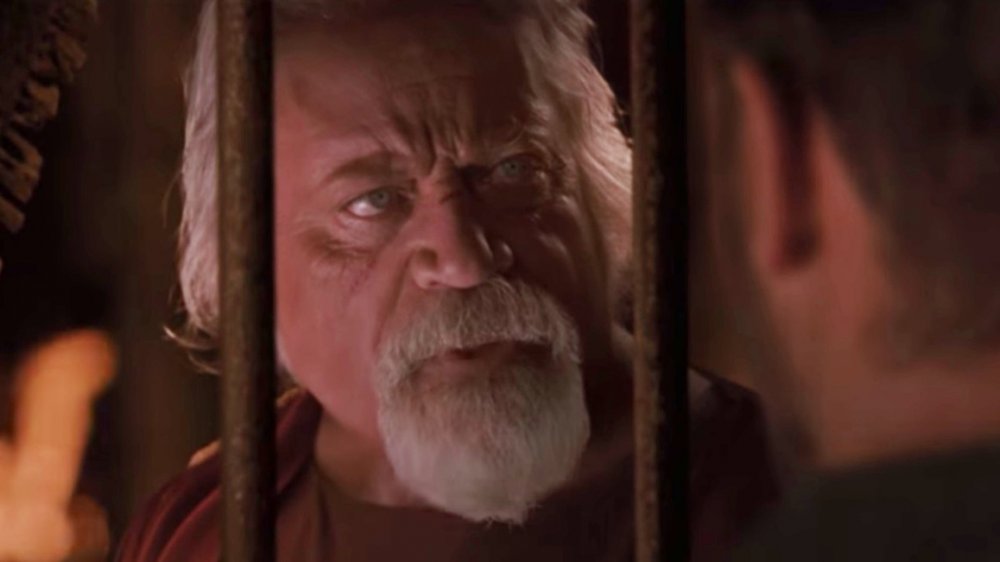
Adultery aside, Maximus shows a true sense of loyalty to the men around him. This is shown in how he planned to repay Proximo (Oliver Reed) upon his freedom, and even breaking formation in the middle of a battle to save the Giant German Hagen (Ralf Möller) from being mowed down by a chariot. It even goes further into showing how his loyalty is repaid from others, with Cesar Marcus Aurelius (Richard Harris) trusting him to rule the Empire, and later when Senator Gracchus (Jacobi) and Cicero (Tommy Flanagan) are among those who conspire with Maximus to overthrow Commodus, despite Maximus being a mere slave at that time.
What I Liked
Music
The thing that stuck out to me most throughout the film was the soundtrack. I had to held off from looking up the composer until the credits rolled because I could tell that this was done by none other than composer Hans Zimmer. The dead giveaway was the heroic score motif for Maximus had a very similar rhythm, if slower, to He’s a Pirate from the Pirates of the Caribbean franchise. Despite the similarities, it fit perfectly and had me hyped up for the scene.
Acting
In my small amount of research into the film, I learned that the dialogue was universally hated by the cast and crew, even so much that Russell Crowe called the script garbage and screenwriter William Nicholson agreed with him. However, Crowe followed up his insult with “but I am the greatest actor in the world, and I can make even garbage sound good”. True to form, he actually did. Something I often ask when watching poor dialogue in film or TV is whether or not it fits the world they live in. Could Thor continue talking as a Shakespearean thespian next to Tony Stark? Does contemporary humour fit in a fantasy about dragons? Does it feel corny, forced, or out of place? Gladiator manages to skirt the line of having intense and heavy dialogue, spoken without modern mannerisms, and not feel awkward or clunky. I believed that these people were living their lives. The stoicism of Maximus, the pretentiousness of Commodus, the regret and tired life of Proximo. Even though behind the scenes suggested a cast of irritated actors, they all gave a performance they could be proud of.
I’ve not mentioned him yet, but Djimon Hounsou as Juba was a welcome unexpected appearance. I’ve not seen much of him outside of Guardians of the Galaxy and The King’s Man, something I would like to change, but his scenes about faith during the calm periods were some of the most heart warming moments of the film.
Camera Work
Gladiator was made in 2000, which may seem like a long time ago, a quarter of a century in fact, but a lot of techniques in film making had already been developed by that point. A year earlier had the release of the Matrix and Fight Club. Animation was preparing for the release of Shrek. Star Wars was in the middle of their Prequel Trilogy which was pushing the boundaries of CG. Gladiator instead focused on a mix of classic and modern techniques. For the most part it favoured special effects over visual effects, not counting a scene featuring Proximo that had to be created with unused footage of actor Oliver Reed due to his untimely death during production. One thing that did stand out to me was the classic dramatic zoom that was utilized multiple times, notably for Gracchus when describing how Commodus planned to win over his people. It usually highlighted an intensity aimed at the character shown, from the viewpoint of another; or when a character knew something that others didn’t. It made the film feel dated in a way that made you believe it was even older than it really was, almost as though Ridley Scott wanted to focus on the abilities of the actor like older films would.
What I Didn’t Like
Honestly, this was one of the hardest films to hate. I knew it was made in 2000 which gave me the preconceived notion that it would be riddled with problematic story issues that was the standard in the 90s and 00s. But no. It stayed on track, it told it’s story, and it didn’t need cheap tricks to keep the audiences attention. If the films I watch this year are anything to the quality of this one, I am in for a good year.
Conclusion
Without a doubt the best way to start a year of films. A serious and action filled story with incredible acting and an amazing soundtrack. No amount of poor writing could keep this cast down: 8/10.
As part of my film reviews, I’ll also be ranking the films I watch this year, and as an easy start Gladiator will be taking top spot at #1. On Wednesday I will be seeing We Live In Time starring Andrew Garfield and Florence Pugh. You can find my updated watchlist linked at the end of that review on Wednesday/Thursday.
 Royston D A
1 thought on “Look Back Monday: Gladiator (2000) Film Review”