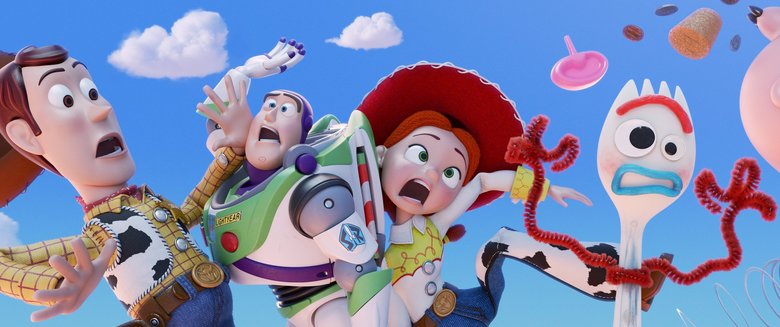
Almost a quarter of a century since the original, Toy Story 4 sees the return of Buzz and Woody (Tim Allen and Tom Hanks) on another playtime adventure. This time the toys go back to basics by saving their kid’s favourite lost toy, Forky (Tony Hale). The sequel follows Woody and the gang after Andy has given all his old toys to Bonnie, and her family take a vacation.
Thoughts on the story.
As a regular theme of Toy Story, this film continues the trend of Buzz or Woody saving a lost toy. After the supposed-to-be-finale of Toy Story 3 (2010), I didn’t really want to see this. The lost toy is a spork? Doesn’t interest me. Return of Bo Peep? Good idea, but still no. I saw the film out of trust in Pixar. They only make a film if the story is worth making. The idea was never about saving a new lost toy, it’s not even about Woody no longer being the favourite toy. It’s about Woody’s role as a toy. He’s no longer in charge since Dolly has been with Bonnie for the longest. He’s not got as much authority as a Sheriff since Bonnie favours Jessie.
So where does that leave Woody? That seems to be what the film tackles. What is a toy’s purpose when they never get played with? It’s a surprisingly existential topic to cover within a kids film, one that Pixar handles incredibly well. By the end of the film Woody realizes that his role is not to make one kid happy at a time, but to make all kids happy. Whether that be by playing with him or pairing a kid off with a toy. It gives off a Santa Claus vibe, and with the voice of Tom Hanks, it definitely fits as Woody’s future role.
Every Toy Story needs a villain. Enter Gabby Gabby, voiced by Christina Hendricks. A toy whose heart is set on becoming the new favourite toy of a little girl, and will do whatever she can to make sure she’s wanted. Including taking Woody’s voice box. Accompanied by a squad of Jimmy Carr looking dolls named Vincent, Forky is held hostage by Gabby in return for Woody’s voice box. The way this story played out was far better than playing into tropes. The interesting thing about Gabby was how her character could be summarised as being a piece of the three former Toy Story villains.
With Sid, he was a toy destroyer, who liked to piece together other toys. However, though unintentional, he was a kidnapper. In the eyes of the toys, Sid kidnapped them all. Gabby has both these methods in the way she conducts herself. Kidnapping Forky and willing to rip Woody apart to get his voice box. Continuing on, there’s Stinky Pete, the Prospector. This gives Gabby part of her motivation. Both characters believe their worth comes from being perfect, mint. After Gabby learns about Woody, she changes her approach, realizing that Woody wants to help toys. This is when Gabby stops playing the villain, however still has the potential to be. When she is finally seen by Harmony, the little girl she wishes to play with, Gabby gets cast aside. This moment is what is important for Woody. He is there for Gabby to make sure she can find another kid. Something that Lotso-Hugging Bear never had. Instead of letting it grow into hatred, Woody made sure that Gabby would have fun with a kid. Some would argue that Gabby was never the villain, personally I saw her as a villain until she realized she didn’t need to be.
What did you like about it?
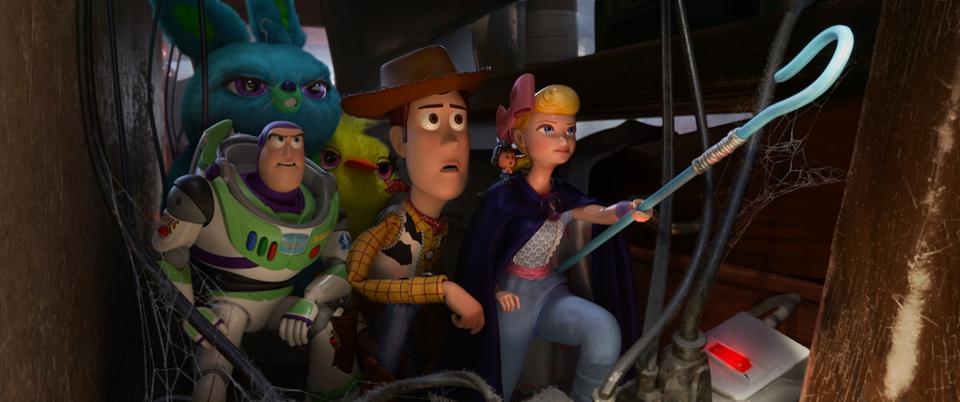
It may be considered pandering to the internet, but I don’t think anyone minded the inclusion of Keanu Reeves in this film as Duke Caboom, who was easily one of the best introductions and gave us my new favourite phrase “Yes I Canada!”. Among the new toys were comedy duo Keegan-Michael Key and Jordan Peele as the voices of Ducky and Bunny, Ally Maki as Giggle McDimples, and Tony Hale as Forky. The humour played by all five characters, each in individual ways, worked incredibly well and made me want to see more of what they had to offer.
One of the best moments comes from Ducky and Bunny, known as the Plush Rush. Without going into why it’s so hilarious, it was easily the biggest laugh throughout the film.
The trouble franchises like Toy Story have, is the need to end the film where it began, so that the children watching can feel a sense of safety in how things should be. At the end of Toy Story (1995), the toys were able to return to Andy. Toy Story 2 (1999) gave us the same neat bow. With Toy Story 3, we were thrown into the uncomfortable situation of a child growing up, and seeing how that must be from the toys perspective. The reason that film felt like a finale was because we were saying goodbye to Andy, and though the toys were kept together, it changed the equilibrium. Now in Toy Story 4, the big equilibrium change came in the form of Woody going his own way. His goal was no longer getting back to Andy, but to find his own place, without the other toys if he needed to. I was overcome with tears, initially wanting to wipe them away before realizing that everyone else had the same reaction.
What is also impressive for a film in this genre is finding the audience. Toy Story has a fan base that spans from children to 30 years olds, or more, and yet it doesn’t fall into the trap that most family and kids films always rely on. Adult humour. The jokes throughout Toy Story 4 is aimed entirely towards children and doesn’t take the easy route to attract older audience members by making sexual or suggestive comments. The only moment I can think of is Buttercup giggling to himself “Dad is totally going to jail!”
What disappointed you?
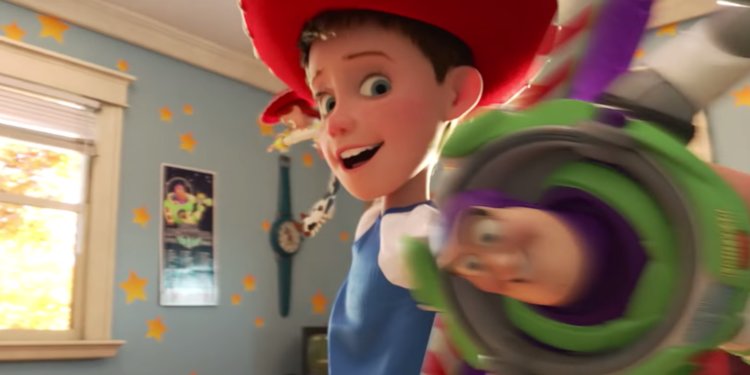
In the early days of Computer Generated Animation, it was incredibly difficult to make a realistic human face that looked normal. Andy was no exception to this, nor was his sister, as they both looked like gooey potato wrapping in clingfilm. It’s easy to see in Pixar’s earlier animated short Tin Toy (1988), and even at times during Dream Works Animation’s Shrek (2001). So Pixar decided to update their models. Admittedly it was less of an issue when making Toy Story 3 as Andy had grown older, so the time between the films made sense to give the characters new looks. However in a flashback scene in the opening for Toy Story 4, we’re treated to Andy’s new look, which is great in terms of animation and design, however it doesn’t resemble Andy at all. I’ve never quite seen an animated character get re-cast. It doesn’t seem to make a whole lot of sense to remodel Andy the way they have considering they’ve finished his side of the story and they showed a newer model of Andy looking like his old self in Toy Story 3.
This film is very much Woody’s film. He is the main character, it’s about his growth, and how he gets through it. While it was great to watch, and the inclusion of the new cast was a true delight, it did drop the ball on the characterization of the rest of Andy’s old toys. At no point in the previous films did they need an invitation to go out on a limb to save a lost toy, it was simply their duty. But here they leave all the hard work to Woody. Even Buzz admits that they should have all been keeping watch on Forky. While it’s understandable that the likes of Mr Potato Head was limited in capability due to the death of Don Rickles two years ago, what excuse did the others have? Buzz joined in, but there was little effort from Jessie, aside from letting down a tire, and none at all from Rex, Hamm, and Slinky Dog.
Conclusion.
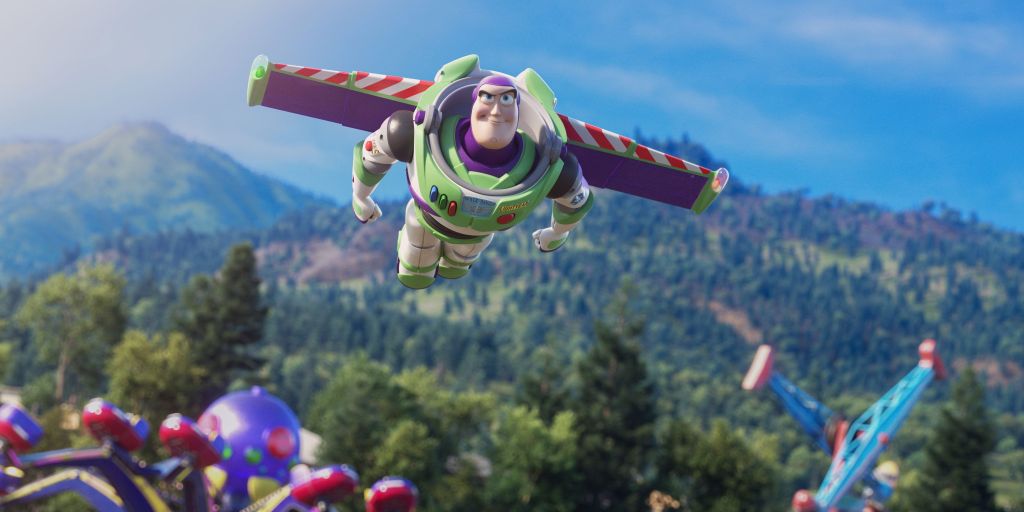
Toy Story 4 continues a story that everyone was finished with after having the perfect ending. Yet we are left with wanting more, knowing how our favourite toys will deal with this new life they’ve found themselves in. It’s an incredibly heartfelt film, with a wholesome message, and plenty of humour that both kids and adults can find fun. As a fan of Toy Story and animation in general, I would recommend this film: 9/10.
 Royston D A