Two years ago audience members were thrilled to discover the return of Bruce Willis as David Dunn in the final scene of Split (2016). The film was praised by film fans as the return of directorial talent for M. Night Shyamalan, as well as a fantastic performance by James McAvoy as the twenty-three personality character of Kevin Wendell Crumb, housing the rebel personalities of the Horde and the Beast. Even Unbreakable (2000) star Samuel L. Jackson was blown away by the revelation, calling the director immediately after he left the screening, asking “Are we gonna make this movie?”.
Glass (2019) is Shyamalan’s surprise trilogy finale that unites David Dunn the Unbreakable, Kevin Wendell Crumb the Beast, and Elijah Price as the titular Mr Glass, as well as return appearances of Spencer Treat Clark, Anya Taylor-Joy, and Charlane Woodard.
We return to the story of the Horde as they continue their spree of abductions and killings of the ‘impure’ for the Beast to feast, and we are re-introduced to David. Since we saw him nineteen years ago, David has left his job as a security guard and owns a security store with his now adult son, Joseph. Together, they maintain the identity of the Overseer. The two supers clash with each other minutes into the film; this then leads them into the awaiting handcuffs of the police, and shortly after, into an asylum, home to the villainous Mr Glass.
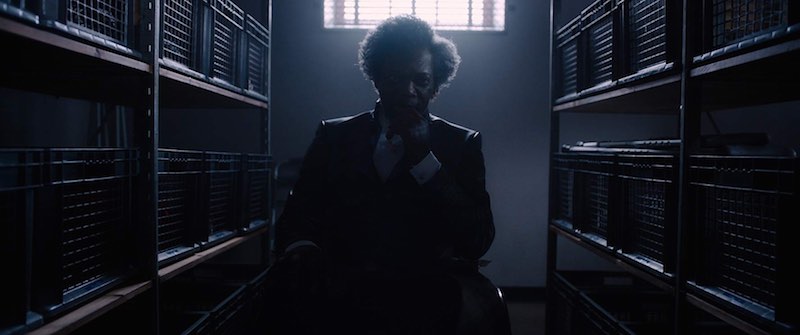
Thoughts on the story.
Since the birth of the Marvel Cinematic Universe, it’s hard to imagine a superhero film that feels like it could be real, but back during the early days of the genre’s breakout, Unbreakable made a great effort. Split on the other hand led us into believing we were witnessing a thriller-horror rather than a villain origin story.
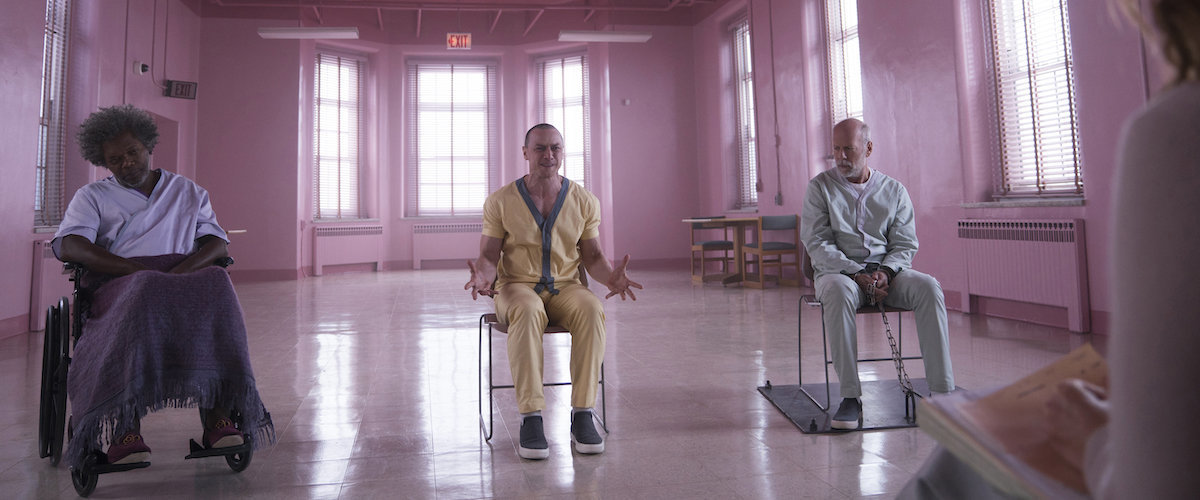
The two are taken to a mental health asylum under the care of Dr. Ellie Staple (Sarah Pulson) who specifies in a specific delusion of grandeur: Those who believe they are superheroes. It’s a great opportunity to gather the main cast and pair Mr Glass with the Beast, however the delusion aspect of the plot plays too heavily on the entire story. It attempts to retcon the events of both prior films by explaining away their powers, stating that convenient circumstances made David and Kevin believe they were capable of incredible feats. During this scene, Staple (or rather Shyamalan) attempts to convince David (and us) that David’s visions come from the ability of Mentalism, so instead of witnessing a persons sin, he deduces information by their physical appearance. But his mind does this so quickly that he doesn’t realize that he’s doing it. Seems a bit more bizarre than actually having visions.
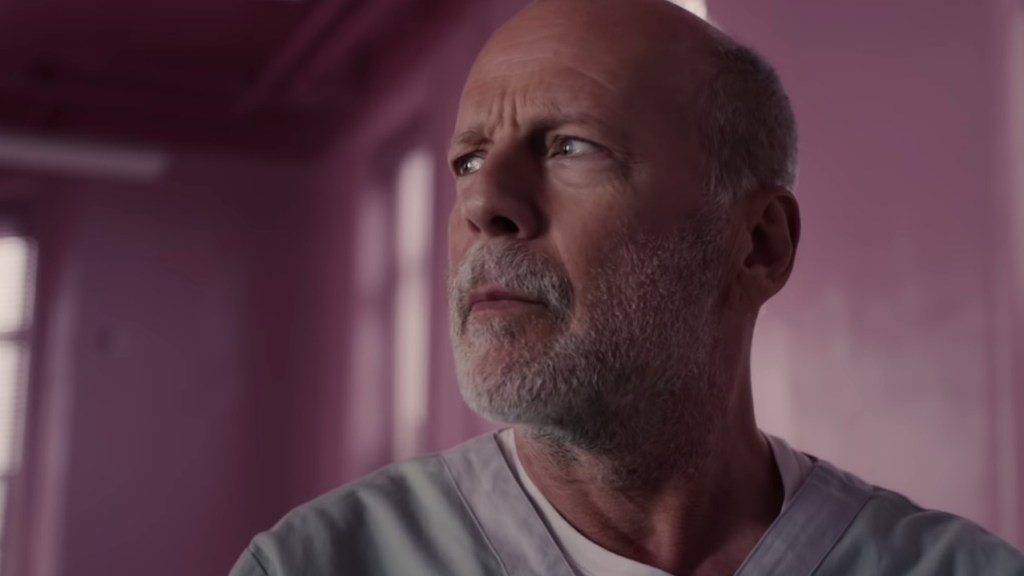
Mr Glass spends the first half of the film pretending to be under the effects of sedatives, and it isn’t until the second half that the promised premise finally begins, as Glass arranges a deal with the Horde to break out of the asylum and fight David. However, as Glass is so enamoured with the concept of living a comic book life, he decides to tell the world know of their existence by setting the stage for the fight at a public televised event, and manipulates David into the plan.
Even as we begin to delve into the setup for the showdown between David and the Beast, we are still being forced this thread that their powers are a delusion, and it grows tiring the longer it goes on, especially when we witness the Beast lift a police car, and David bend a steel beam with his bare hands.
While I appreciate that the idea of the two being comic book characters is a level of the story within the world itself, the meta-narrative became overused and hard to watch, with cringe inducing dialogue from Charlane Woodard’s Mrs Price trying to explain the events around them as if it were the narrative structure of a comic book. When Mr Glass’ plan is interrupted before he has a chance to start it, he and his mother discuss how these events weren’t that of a limited edition comic book, but rather an origin story. A revelation Glass speaks as his final words before succumbing to death. This, along with the deaths of both David and Kevin, left me feeling very empty and without excitement for the final minutes of the film. My interest dropped and I became very aware that we were now just waiting for the twist that has come to plague every Shyamalan film. A twist that, as always, did not satisfy.
What did you like?
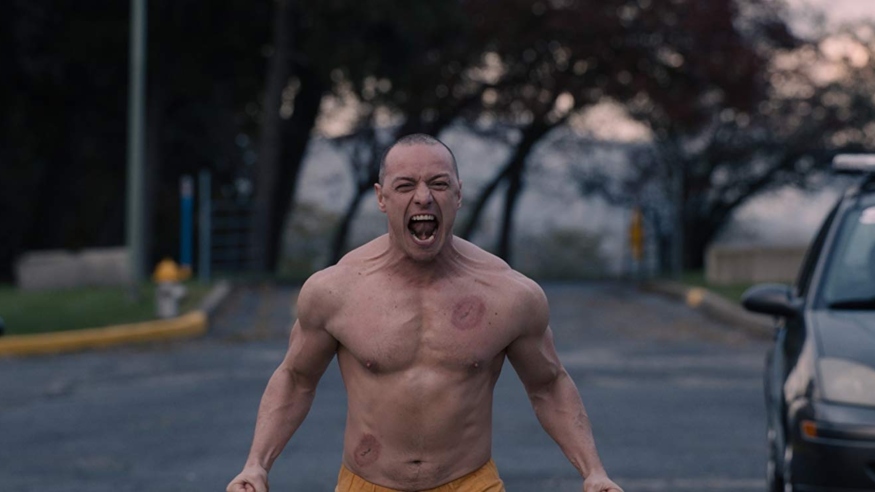
Credit where it is due, James McAvoy was the shining star, and was able to effortlessly portray the personalities living inside Kevin’s head. A particular favourite was Hedwig, a nine year old boy, whose appearances always ended with a giggle, showing some brilliant hidden comedy talent from both Shyamalan and McAvoy. There was an interesting storyline among the personalities where some had switched sides to the Horde, however Dennis seemed to be cast out from them and even showed remorse. Through his body posture and facial expressions, it was easy to tell whenever Dennis takes ‘the light’, and from the brief explanations or details given by the various personalities, we learn the politics going on inside Kevin’s head.
I wouldn’t say that I liked the final scene, in fact, I’d say it was boring, lazy and hollow. However there was a small detail that was hinted at. Part way through the film, a comic book shop owner talks to Casey (Anya Taylor-Joy) about the first ever superhero comic book, Action Comics issue 1, with Superman on the cover holding a car over his head. The world was introduced to superheroes as fiction through this image, and they are introduced to superheroes again as fact through a similar image, as in the final shot, a screen shows the Beast flipping over a car. It was a detail that I appreciated despite the let down of the circumstances it was used it.
What disappointed you?
It’s hard going into a film with low expectations when you spend two years waiting for it. And it’s harder for the film the live up to the expectations when you’ve built it up for so long. Fortunately, this is not the case with Glass. Unfortunately, it still serves as a let down. Whenever writing a character, it is important to keep them consistent from scene to scene, and any changes in their personality need to come from something the audience is aware of by the end of the film. It becomes harder writing a character to be consistent between two films as audiences tend to establish in their minds what the character is and how they behave.
The character of David Dunn in Glass lacks the most important aspects that made him so compelling and believable in Unbreakable. Throughout the entire first film, David is a shy, quiet man, barely speaks up, struggling with depression, and only ever raises his voice when a gun is pointed at him. He doesn’t make witty remarks, or try to assert dominance, even when at work, he’s cool, calm and quiet. But in Glass he feels more like John McClane without his sleep. He tries to be snarky, raises his voice at the sight of Elijah, and feels much more confident. David Dunn is the man who cowered away and was on the verge of tears after discovering the mass murders committed by Mr Glass, not someone who casually makes taunts about him.
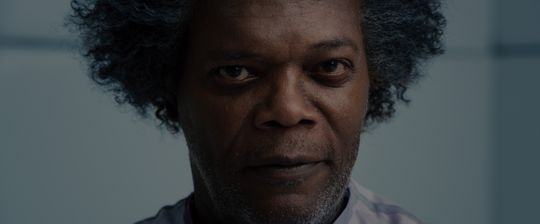
Mr Glass is treated in a similar manner, though it could be argued that this is a result of his incarceration, it doesn’t feel like he’s the same person. As Elijah Price in Unbreakable, he was a smart, inquisitive man. Like David, he never raised his voice, he never swore, he made one joke in the film, and it was awkward to the point that he had to state that he was joking. In the final scene, he didn’t make a villainous speech about how he did terrible things for the good of humanity and cackled like a mad man. Instead his voice broke with tears, relieved he could finally confront David as being the hero, finally able to place himself in the world, a thought that had saddened him since childhood. But again, in Glass, he uses profanity, he’s cruel, and he laughs at his own death. At one point, he begins to rehash a line used in Unbreakable, and it doesn’t take you into the scene the same way, instead it reminds you that you’re watching a sequel and almost tricks you into believing this is a different actor playing the same character.
Usually Shyamalan is smart with his last minute twists, trying to pull the rug from under us with clever details sprinkled throughout the film, without ever drawing attention to detail, but seeding the thoughts in our mind. He also has a habit of attempting too complicated a twist that it reduces the significance of the rest of the film, or we were never that enthralled by the film to begin with, and the twist feels more like when you check the fridge to see if there’s anything new to eat and walk away unsatisfied anyway. Glass carries a different issue. It attempts to feed us three twists, and each one feels unsatisfactory.
The first was predicted by many, that Kevin’s father was on the same train as David at the beginning of Unbreakable, thus when he died, Kevin was left with his abusive mother that created the other personalities. Shyamalan stated that he planned to have Kevin’s story threaded throughout Unbreakable, however couldn’t handle the constraints of a single film. So this twist falling flat wasn’t so much his fault, and probably would’ve served the film better as a plot device between Mr Glass and the Beast.
The second had something unusual for Shyamalan as he did not leave any clues or hints, and decided to introduce a last minute society of superhero killers, whose goal it was to stop people believing in gods among men. It felt cheap, and poorly written, as if he tacked it on after they had already begun filming.
The final twist of Mr Glass using footage from inside the hospital as the real stage for the superhero coming out party, is the only one that follows true to form for Shyamalan. It was hinted, it was addressed, we were given all the clues that it was going to happen. But after the introduction of the secret society, their loss felt boring. We don’t have anything against these people other than their collective murder of David, Kevin and Elijah, which already feels cheap, we don’t even have faces to humanize them, nor do they get a comeuppance. Their defeat is a defeat of goal, where our heroes die without achieving anything.
Conclusion.
While this is not intended to be a high action, witty, sexy, and fun film, it does not deliver on the promise of being a sequel to both Unbreakable or Split. The story cuts short, the characters are mis-portrayed, and the fight sequences fail to hold any interest. There were too many moments that made James McAvoy look goofy in his Beast persona, including the misuse of M. Night Shyamalan’s infamous lingering shot, best used during quiet times of exposition or character display, not for a man to leap on his hands and feet, leaving the audience sat cringing as he only makes it across 10% of the screen in three seconds.
With the release of Split, I announced the beginning of the Shyamalanaissance. I will be the first to hold my hands up and say I was wrong. Even as a fan of Unbreakable and Split, I would not recommend this film: 3/10.
 Royston D A